

Originally published in “Hayim Aherim” (Other Life) Magazine
In human beings, there are innate “super-patterns” of thought and emotion are embedded, which Carl Gustav Jung termed “psychic archetypes.” These archetypes are part of the human hardware, and their traces can be found as products in all fields of human creation and activity. They can act in the consciousness as positive or destructive forces. They are creative when they are inspiring, and destructive when they become rigid and turn into prejudices.
According to the pioneering artist Joseph Beuys, the artist thinks and creates, and in their work, the world is created anew. The artist becomes a partner and continues the ceaseless cosmic unfolding. Through the reunification of the three branches—science, art, and religion—the existential and cognitive power will be created, capable of overcoming the duality between man and the world, between the individual and society, and the abyss currently yawning between vision and reality.
Unlike Western society, ancient and pre-modern societies are distinguished by a worldview that rebels against concrete, historical time, and is characterized by an affinity for a cyclical return to the mythical time of the beginning. According to their worldview, the history of the world is built of cosmic cycles. These two perceptions can be formally represented: the secular perception of linear time is a line, while the ancient perception of cyclical time is a circle.
The research of anthropologists Carl Schuster and Edmund Carpenter (in their monumental book Patterns that connect) reveals natural universal patterns of self-organization, which lie at the foundation of traditional arts. The primary role of memory in the preservation of traditional cultures lies in the production of formal patterns of organization, which are very ancient and stable over time. This is the reason why there is such a great similarity between religious doctrines, folklore, art, and architecture across the world.
Immense power lies in the geometric forms and symbols existing in the world, which constitute codes hidden deep within the human DNA. Through learning and visual connection to forms, it is possible to increase the range of information to the infinite possibilities and depths contained within it. Playing with the forms expands the brain’s ability to create renewed mental structures that break through the boundaries of our current reality.
The pantheon of ancient Egyptian gods and goddesses is an example of pagan perceptions embodying universal, awe-inspiring forces of nature. These forces are expressed in man as psychic forces, as archetypes of states of consciousness. The temple is a symbol of the universe, a communal meeting place to experience and meditate on the archetypes of the laws of the universe and embody them consciously in the soul. The temple also represents the divine principle, a living structure of a spiritual principle.
Studies around the world testify to the existence of psychic super-patterns embedded within us and to the importance of symbols for our soul life. We are still far from understanding the dynamics of the soul and their consequences, but it seems that these archetypes have a decisive influence on us. They shape our emotional makeup and our ethical and mental worldview, and influence our relationships and our wholeness of destiny. The archetypal symbols in the soul operate according to a holistic pattern, and a deep understanding of them can assist in healing.
Art seeks to dive into reality, into the forms of its becoming and its processes, into its infinite change. The act of art is an act of identifying the symbols, the archetypal forms in the world around us, and an attempt to find our place in it again through repeating the act of re-creation, an eternal return to the manner of the becoming of organic form.
Johann Wolfgang von Goethe said that “From the totality of nature’s forms, we learn of the one and only form.” Through the separate, the archetype is revealed, and following it, the essential needs common to humanity can also be revealed.
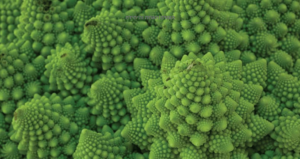
Psychic Super-Patterns
The elusive quality of the connection between art and the primordial is found within the dialogue with the symbol and the form in the process of creating art, making the act of art a rite of initiation, allowing us to be in contact with the sacred values of life. The process of creation is a testament to our emotional, psychic, and mental quality.
Jungian psychoanalyst Robert Moore says that “ordinary” people will not survive in the future, because they will not have the spiritual resources to survive. Healing comes through the numinous, the will of God within us, through a connection to the sacred.
Since forever, the myth has been present behind the scenes of every style and period in art. The recognition of the timeless quality of the myth points to the fact that something eternal, even if hidden, is always present and serves as a necessary component for the wholeness of life. Turning to the myth allows the receipt of psychic power from hidden forces that are beyond our understanding.
Since Western culture lost its mythical perception, its cosmology of the world, a deep hole has opened in the understanding of the cosmic structures of the universe, of man’s place within the cosmos, and of the human soul. This spiritual poverty brought about the emergence of psychology, an attempt to bridge the practical world and the mythical world. Psychology clearly demonstrates that the logic, heroes, and deeds of the myth live and exist even in the modern era. In the absence of a general living and recognized mythology in Western culture, each of us treasures within a private dream pantheon that receives no recognition, a pantheon that is most basic and yet holds hidden power.
Joseph Campbell, The Power of Myth
The forces of the unconscious echo not only in the clinic, but also in mythology, religion, art, and philosophy—in all fields of creation. The assumption is that in human beings, innate “super-patterns” of thought and emotion are embedded, which were termed by Carl Gustav Jung “psychic archetypes.” These archetypes are part of human hardware, and therefore it is natural that we find their traces as products in all fields of human creation and activity. Psychic archetypes can act in the consciousness as positive or destructive forces. They are creative when they are inspiring and destructive when they become rigid and turn into prejudices.
Rites of passage and initiation are the rafts upon which we sail as we pass through significant life experiences such as sexual maturation, marriage, status—class, social and professional—and the process of death. They help us transition to the next developmental stage.
Authentic rites of passage and initiation establish meaning on the personal path of each individual and on the collective human path, where the ultimate goal is to establish a meaningful life and create a psychic fusion between the inner male and female—the Jungian Anima and Animus. These rituals awaken dormant elements within us and harness them for our personal development. This is the reason for our need for myths. They are relevant for establishing meaning and a reason for our lives, for understanding and embodying the eternal basic needs common to every person as a person; to every community as it is.
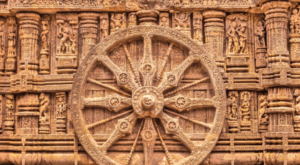
Infinite Cosmic Becoming
Joseph Beuys saw himself as an artist-shaman. He was influenced by Anthroposophy, and in his body of work, a mythical narrative is found. He believed that we must connect to the driving force that turns life and creation into one piece, to see how within all our actions a new image of man and world operates as a living reality, and to reunite the three branches of spiritual life that were torn apart at the beginning of the modern era—science, art, and religion. As a result of the rift, humanity lost the unifying power of social life, which depends on the internal human wholeness of each individual.
According to Beuys’ perception, the artist thinks and creates, and in their work, the world is created anew. However, the laws of artistic language are revealed through the process of creation as the same laws that created the world in the first place. The artist becomes a partner and continues the ceaseless cosmic unfolding. Through the reunification of the three branches, the existential and cognitive power will be created, capable of overcoming the duality between man and the world, between the individual and society, and the abyss currently yawning between vision and reality.
A magical ritual is not an act of magic, but a psychic attunement. The best definition for the words “magic” and “sorcery” is “symbolic action with intent,” and this is the meaning of the ritual process. The word “action” is in the context of creative meaning. This is the act of art in its deepest original sense. Art becomes life, and life is a ritual and devotion to eternal life. They become a religion of the everyday, a new social being. This is art according to Beuys.
The scholar of religions Mircea Eliade speaks in his book The Myth of the Eternal Return about myths around the world, all expressing the same infinite return to the point of origin, to singularity, The First Time. According to him, Western philosophy risks provincialism by obsessively concentrating on its own tradition while ignoring the problems and solutions of Eastern thought and by insisting on not attributing importance to the experience of the indigenous person belonging to traditional societies. In his opinion, philosophical anthropology can learn a lot from the way the indigenous person valued his situation in the universe. Recognizing indigenous worldviews will refresh some basic assumptions in philosophy.
Eliade further claims that myth is the philosophy of history. Unlike Western society, archaic and pre-modern societies are distinguished by a worldview that rebels against concrete, historical time, and is characterized by an affinity for a cyclical return to the mythical time of the beginning. The rejection of linear, concrete time, and the resistance to any attempt at an autonomous “history” lacking an archetypal order are the result of a worldview according to which the world’s history is built of cosmic cycles, and within each cycle, the history we know exists.
These two perceptions can be formally represented—a line versus a circle. The secular perception of linear time is a line, while the ancient perception of cyclical time is a circle.
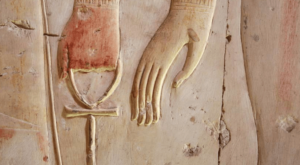
Living the Myth
For the indigenous person, “reality is a function of the imitation of a celestial archetype.” Reality is granted by participating in the “symbolism of the center.” Cities, temples, and houses become real by being identified with the “center of the world”—the Omphalos stone at the Oracle of Delphi, Machu Picchu in Peru, the Temple Mount in Jerusalem, the monumental Moai statues on Easter Island, and more. Rituals and significant secular actions are significant because they intentionally repeat certain actions that were first done by the gods, the heroes, or the ancient fathers and mothers.
As a post-modern Western society, we have suppressed the fact that anthropology, the study of universal cultures, is the complete story and human heritage that belongs to us all. The anthropological narrative surrounds us on all sides, and every culture is a single thread in a colorful fabric. Only if we understand this will we understand the multi-dimensionality and richness of the human experience.
Anthropologists Carl Schuster and Edmund Carpenter in their foundational book Patterns that connect research the existence of universal formal patterns, psychic archetypes that are translated into formal archetypes appearing in different cultures around the world since the dawn of humanity. Their research reveals universal patterns of organization found at the basis of traditional arts.
Linear worldview and historical education stand at the foundation of Western culture since its rise. The primary role of memory in the commemoration of traditional cultures lies in the production of formal patterns of organization that are very ancient and stable over time. This is the reason why there is such a great similarity between religious doctrines, folklore, art, and architecture across the world.
From the book: “Indigenous arts offer us an important means to penetrate certain areas of ancient art—Terra Incognita. Schematic art from prehistoric periods will remain a subject of unanswered speculation if we do not observe and compare it to indigenous design and contemporary modern design. The concept behind this comparison is simple—art begets art. If we wish to study the cradle of traditional art, we must dig deep.”
Alongside life in the materialistic Western society, a global trend of virtual and physical, social, ecological, and artistic communities interested in cognitive and spiritual development and working to create alternatives of sustainability is also evident. This developing global spiritual movement emphasizes how through ancient and new modes of expression, the trinity merges: myth – ritual – the sacred, in a manner reflecting a parallel era of developing consciousness that returns the myth to everyday life.
The art belonging to this spiritual renaissance of mythical art, to neo-tribalism, seeks to express the artist’s private myth, so that it will guide the personal path and provide the keys to crack themselves. This artistic trend shows that it is possible to live the myth and your longing. This new-ancient art brings the artistic persona to the public space, where it is seen by others and creates interaction with the community.
Art in the Fullest Sense
The most primordial religious structure is animism—which sees a soul in everything, in which nature is the religion and the earth is the temple. In this context, mountains, rivers, cities, and temples are a concrete expression of archetypal forces in the universe. The material world is a “pattern” or “double” existing on a cosmic level, and thus meaning is granted to the concept of duality in the world of reality.
Myth scholar Mircea Eliade speaks of territories as archetypes, of “wild” areas versus “cultivated” ones. Civilized territories are linked to the “higher” cosmic level, while unknown “virgin” areas are attributed to chaos—to undifferentiated existence lacking form before creation. The territorial conquest of a virgin area is accompanied by rituals that transfer a process of renewed creation, a symbolic repetition of the act of creation. Man always builds according to archetypes. The model always precedes earthly architecture and is found in an ideal zone of eternity.
Deep observation of indigenous cultures’ arts reveals profound intelligence and intuition, a cohesive spiritual worldview, artistic virtuosity, and the ability of abstraction. The stunning abstract designs stem from observation of nature. The indigenous person is a scientist learning from the nature in which he is located. Ceramics, carving, textiles, and indigenous tattooing are a tribute to deep observation of nature and recognition of the forces operating and sustaining us on the earth, in the inter-generational connections with the ancient fathers and mothers.
Usually, the symbols are chosen from the language of symbols and forms of the tribal heritage. Thus, designs of a symbolic character are created, drawing inspiration from phenomena of the natural world such as biology, botany, celestial bodies, and the human body, and become archetypal formal and geometric patterns.
The sacred person becomes an artist in the full sense of the word. He creates a new world of connections and relationships. He seeks conscious action, metamorphosis, and the abolition of the opposites in the actual reality. It is not the world’s fault that it appears to us as an object lacking life and soul, because the source of separation is found in a certain form of our thought and life. We must seek the key to its abolition solely in man.
Anthropologist of art Ellen Dissanayake argues that “In modern culture, the important and the significant—no longer interests anyone.” Is the confusing and unsatisfactory state of art in our world related to the fact that significant things are no longer important to us? In our hedonistic and impressionable society, spiritual aspirations lose their validity and relevance. Our experiences of the extraordinary are diverted toward experiences of capitalist consumer culture, of violence, and of ecological irresponsibility.
Dissanayake argues that creation is an evolutionary drive embedded in Homo sapiens, and calls us by the name “Homo Aestheticus.” In pre-modern and prehistoric cultures, art was created for personal and community rites of passage and initiation in a multi-sensory context—within a framework of plastic art, music and dance, body decoration, and tattooing, as a holistic process. It was important that all members of the community participate and not just those considered to have talent. The goal was healing and transformation through the stages of passage and initiation. The practice allowed the community to learn and experience the world around it in an unmediated way. Pre-modern architecture, tattooing, and textile art, ceramics, and wood are one language.

Language of Light and Creation
Immense power lies in the geometric forms and symbols existing in the world, which constitute codes hidden deep within the human DNA. Through learning and visual connection to forms, it is possible to increase the range of information beyond what exists in us, to the infinite possibilities and depths contained within it. Slowly and gradually we remember knowledge because the symbols exist within us and are familiar to the cells of the body. Every symbol contains within it infinite information that is far beyond the boundaries of the knowledge existing in our conscious mind at the moment.
Playing with the forms expands the brain’s ability to create renewed mental structures that break through the boundaries of our current reality. “Working with the symbols awakens the soul’s knowledge lying deep within us and allows us to move in life in a wavy, spiral, pleasant, and creative flow, while connecting to a primordial frequency, connecting us to love and infinite light that exists in the universe and within us,” says Talia Toker, a researcher of Mayan culture.
Sacred geometry is a universal language expressing the laws of the universe and the forces operating within it. It is an expression of both observable reality and hidden reality. The hidden architecture, standing at the foundation of all that exists and demonstrating the dynamics in which it is created, unfolds, and exists in everything in the intelligent cosmos.
The Flower of Life pattern, for example, is a geometric infrastructure created from spheres, circles, only, and from within it all forms, patterns, and wave fields known to us are created. From a physical perspective, this is the language of light, wave motion, and gravity, the language of infinite creation. The new unified physics adds a layer to this understanding through the concept of plasma universe, and quantum entanglement. Studies on the subject of sacred geometry lead us to the recognition that we live in an intelligent, connected, and full-of-life universe.
According to the holographic universe idea, everything is “one” across different scales from the micro to the macro, like a spider web on which countless dewdrops lie. Each dewdrop reflects the information about every other drop, and thus the information is exchanged through the dimensions of the universe in a reciprocal relationship. An infinite loop of feedback, with the spiritual and the material held together as a whole and as a synergistic dynamic.
Sacred geometry is a universal language of fundamental geometric forms and super-patterns through which the universe and all that is within it unfold. The word “sacred” is a value without which one cannot be. Everything in the universe unfolds by identical geometric principles. There is a super-pattern that creates the universe—God, creation, or an intelligent cosmos. The understanding that there is a super-pattern creating the universe awakens a need to conduct a re-examination of our understanding of the universe, our role in it, and the responsibility placed upon us as human beings.
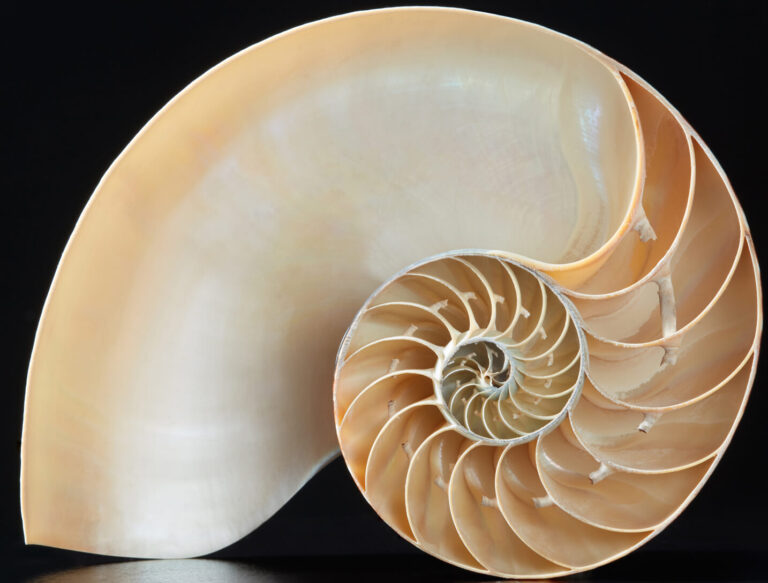
Everything in the universe unfolds through spiral movement in a multi-dimensional space. Swirling is a dominant law influencing the hidden dynamics of our world. We notice this movement in nature—in shells, flowers, pinecones, in DNA, and in the rotation of distant galaxies. All that exists in the universe are swirling wave fields, vibrations vibrating in different states of gravity and geometry, creating the world of matter. These basic geometric forms are the hidden architecture of our world.
A central idea shared by almost all beliefs is that the universe is a living entity possessing consciousness. This super-intelligence has woven together the threads of space, time, energy, matter, biology, and consciousness in its image. Despite the enormous size of the universe, it seems that we are all personally connected to that sublime identity and will continue to live long after the death of our physical body.
Understanding the Forces of the World
The word “Tantra” means in Sanskrit “to expand,” and it hints at wide bodies of knowledge. Thanks to Tantra, we understand the chakra system. Man alone will no longer be able to be the yardstick of the universe. He is woven integrally with all that exists and in everything he seeks the foundational essence called in the language of Tantra “the subtle world,” “Shastras.”
When thinking about abstract art, usually one thinks in terms of space and time. Tantra art moves beyond that and brings concepts of sound and light, and for this, there is no equivalent in Western art. In this spiritual process, a new sign language symbolizing the human-universe relationship is revealed and becomes accessible and useful. Tantric art can be considered, for example, one of the basic essential forms of Yoga.
In view of the limitations of language, art turns to abstract symbolism of horizontal and vertical lines, points, and circles. In contrast, Tantric art always searches for basic and essential values, forms that connect into architectural and geometric patterns. These are the formal archetypes.
The basic formal archetypes—circle, spiral, and line, echo within us on different levels. In the world of reality, the archetype meets the principle of duality—female and male, empty and full, disturbance and fusion, depth and flattening, stability and shifting, movement and static, balance and flow, symmetry and asymmetry, private and universal, accidental and intentional, fleeting and timeless.
Symbols and Tantric forms are a vast reservoir of knowledge about which very little is known. They illuminate form and color and make spiritual development accessible. Knowing the cosmic order leads the Tantric student to make himself part of the mystery. In the ancient era, this is what revealed the truth to the Tantric artist, opening a door to a new understanding of the forces of the world. Now contemporary artists try to express, see, know, discover, and enjoy these functions or forces.
The ability to see the truth depends on the ability of the consciousness to be quiet and still in order to receive it. Truth can be experienced only intensely. Therefore, Tantric artists dedicate themselves to the task of merging and integrating their visions. In India, these tasks were considered a branch of Yoga and included, like any other spiritual activity, discipline and ritual.
Tantric texts emphasize the importance of visualization and the hidden meaning of things. The vision allows the artist to see and experience reality in a superior form of concentration and focus that is higher than just images. Through ritual, the believer recites a mantra describing the celestial entity and creates a parallel mental image. His prayers are answered in a way that relates to the imagined form, and to that “focus” offerings are brought.

High States of Consciousness
A wealth of archaeological, astronomical, mathematical, geological, and cartographic research points to parallels and direct affinities between ancient archaeological structures and stellar constellations. Monuments such as Machu Picchu in Peru, the three pyramids complex in Giza, Angkor Wat temple in Cambodia, and the Nazca lines in Peru contain encoded information and within it advanced scientific knowledge in various fields such as astronomy, trigonometry, geometry, architecture, and sound.
In the field of contemporary archaeology, much evidence is accumulating, establishing the possibility that the ancient Egyptians understood and implemented the principles of sacred geometry well. Egyptologist Schwaller de Lubicz researched the art and monuments in ancient Egypt and sees in them a sacred science based on symbolism, harmonic proportions, and sacred geometry; deep intelligence encoded within the hieroglyphs, monuments, temples, and ancient Egyptian art. Interpreting the hieroglyphs as carriers of a Hermetic message, de Lubicz discovered in Egypt the earliest evidence of a sacred science, which became the basis of the perennial philosophy, fragments of which were preserved to this day by Gnostics, Sufis, Kabbalists, Rosicrucians, and Freemasons, but mainly by enlightened spiritual teachers and seers of the hidden.
The Egyptian symbolic tools were intended to allow an immediate intuitive understanding rather than the transfer of information. They were a means to escape the shackles of matter, which limits human intelligence, and to connect to higher and more sublime states of consciousness. The Egyptians did not distinguish between high states of consciousness and the physical body. On the contrary, this distinction is a mental illusion. Everything in the universe was for them different degrees of states of consciousness.
During the 15 years he lived in Egypt, de Lubicz discovered that the temple complex at Luxor contains “global lessons.” Every temple is a chapter of a specific theme within which this sacred science develops. Every temple “speaks” through its overall plan, the basic foundational orientation of its design, its choice of materials, and the openings in its walls.
In the Luxor temple, de Lubicz discovered what is probably the only monument effectively representing the architectural simulation of man. The temple contains esoteric knowledge such as the location of endocrine glands, Hindu energy centers, the chakras, and acupuncture points. He discovered that the astronomical orientation of the temple, the geometry of its structure, the simulations, and the inscriptions are a symbolic expression of the human body and precise locations physiologically.
The human body is a living synthesis of the essential vital functions of the universe. Within the temple occurs the primordial struggle between light and darkness, between yin and yang, between gravity and levitation, between the god and the goddess, between male and female, and between king and queen. This is a temple that man must refine and distill through the incarnations until the creation of a replica of the cosmic man.
For de Lubicz, the temple also represents cosmic and celestial measures and correspondences with the movement of celestial bodies and with specific astronomical eras. The integrations between the relationships and affinities between stars, planets, metals, colors, and sounds, as well as between types of plants, animals, and organs in the body are revealed through a complete science of numbers.
The pantheon of ancient Egyptian gods and goddesses, called Netjer, is similar in its perception to the ancient Titans and other pagan perceptions, embodying universal, awe-inspiring forces of nature. These forces are expressed in man as psychic forces, as archetypes of states of consciousness. The temple is a symbol of the universe, a communal meeting place to experience and meditate on the archetypes of the laws of the universe and embody them consciously in the soul. The temple represents the God and the principle, a living structure of a spiritual principle.
When the scientist tries to reach the unknown without truly decoding it, the metaphysician reminds him that it is impossible to research the truth, only to know intuitively or through vision. As Joseph Campbell said, the myth is the secret opening through which the inexhaustible energies of the universe flow to be expressed in human culture. Religions, worldviews, arts, the social conventions of ancient man and historical man, the discoveries of science, technology, and our dreams, all bubble and rise from the same base.
“The symbols of the myth cannot be ordered, nor can they be permanently suppressed. They are spontaneous products of the soul. In each of them lies, in its wholeness, the seed of the power of the source from which it flowed.”
Joseph Campbell, The Hero with a Thousand Faces
Bibliographic Sources
Rudolf Steiner, “Aesthetics of the Future – Fruit of Goethe’s Spirit,” Michael Publishing, translation: Ilan Wig, 1985-1971.
Yeshayahu Ben-Aharon, “Homage to Joseph Beuys,” article, Kav 8, magazine, 1988.
Mircea Eliade, “The Myth of the Eternal Return – Archetypes and Repetition,” from French: Yotam Reuveni, Carmel Publishing, Jerusalem, 2000.
Carl Schuster & Edmund Carpenter, “Patterns that connect – Social Symbolism in ancient and tribal art”, Harry N. Abrams, Inc., Publishers, New York.
Yasmine Bergner, “The Great Rite of Passage,” article, “Erev Rav”—online magazine for culture and art, 2013.
Ellen Dissanayake, “Homo Aestheticus – Where art comes from and why”, University of Washington Press, Seattle & London, 1995.
www.mayazone.co.il
David Wilcock, “The Source Field Investigations—The Hidden Science and Lost Civilizations Behind the 2012 Prophecies,” Maram Publishing, 2015, from English: Ofer Mashiah.
“The symbolic aspect of form”, Alice Bonner, 1949
John Anthony West, “Serpent in the sky – the high wisdom of ancient Egypt”, Quest books, theosophical publishing house, Wheaton IL. USA
Joseph Campbell, “The Hero with a Thousand Faces,” Babel Publishing, translation: Shlomit Kanaan, 2013 (published in 1949).