
Curating and Research: Yasmine Bergner
Opening: 10/11/2016 Closing: 10/11/2017
Eretz Israel Museum [MUZA] – Tel Aviv
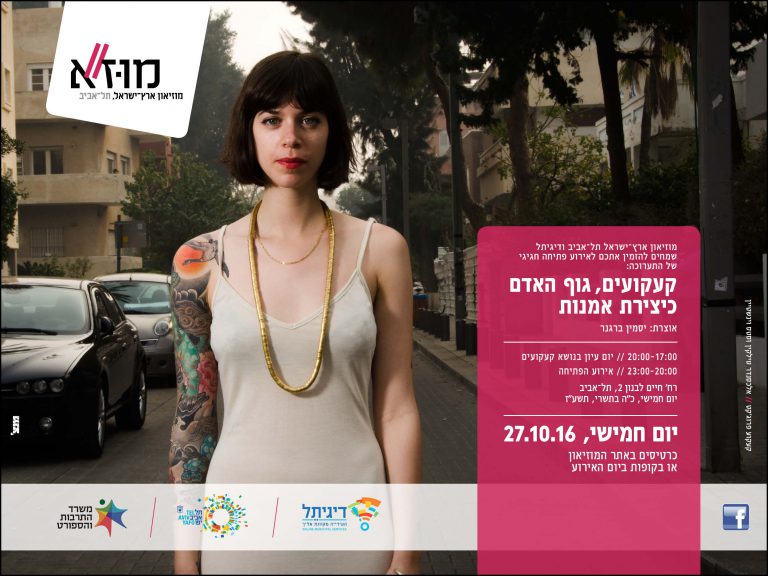
Since the dawn of history, the tattooed body has been a way to glorify and define the individual and the collective. The art of tattooing originates in shamanic rites of passage and initiation traditions in indigenous cultures. Every tattoo work around the world contains pieces of culture and history and embodies personal, social, ecological, and spiritual values.
The exhibition deals with the history of tattooing and reveals a variety of contemporary artistic trends in Israel and around the world. It also presents the works of the American photographer and tattoo anthropologist Dr. Lars Krutak, whose books and travels document traditional and contemporary tribal tattoo cultures around the globe. A significant place in the exhibition is dedicated to contemporary tattooing and the Israeli tattoo community, as documented through the camera lens of “Tattoo Project” (Featured image: Alex Tilkin and Stas Weinstein). A place of honor is also given to the tradition of pilgrimage tattooing in Jerusalem (the Razzouk family), to David Mosko, the “Tattooed Sailor,” alongside the works of other tattoo artists and photographers from Israel and the world, films, rare items, and colorful documentation.
Today, more than ever, global tattoo culture is an intercultural celebration that connects the ends of the earth, between the past and contemporary reality. Tattoo cultures around the globe contain fascinating pieces of culture and history that simultaneously embody personal, social, and spiritual values.
Global tattoo culture is currently undergoing a historical re-examination in the wake of modernization and globalization processes. A new global social trend is emerging, embracing tattoo art and recognizing its importance and multicultural uniqueness. This global trend reflects cultural diversity and presents a revival of ancient customs of body decoration and tattooing alongside contemporary and groundbreaking practices, arriving today from the four corners of the earth. This fascinating cultural trend expresses a cross-border cultural mosaic of the human experience through tattoos—a living and breathing art on our bodies.
It seems that after thousands of years of tradition, tattoo art has captured our hearts again and is here to stay. If in the past tattoos were considered an expression of rebellion and non-conformism, today they represent, more than anything, freedom of choice. The tattooed body is a personal body diary, reminding us where we came from and where we would like to go, and is experienced more and more by the Israeli public as a deep internal and spiritual process.
The tattoo has a special ability to connect body and soul, between one person and another, and between the individual and the culture in which they exist. Tattoos are an illustration of our ability to change and be changed. Through them, a person can take ownership of their body and turn it into a temple, a canvas, or a private billboard. In my tattoo research over the last decade, I aim to expose the Israeli public to a variety of contemporary artistic tattoo trends in Israel and abroad, and to teach the history of tattooing as a world-encompassing artistic-spiritual practice since the dawn of history.
Text: Yasmine Bergner, from the exhibition book (to download the exhibition book in PDF, scroll to the bottom)
Exhibition documentation: Leonid Padrul
Courtesy of Eretz Israel Museum

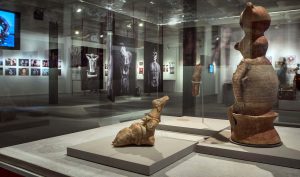
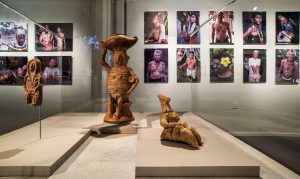
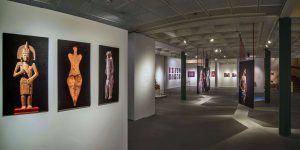




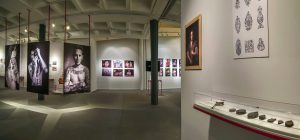
Photography: Leonid Padrul, courtesy of Eretz Israel Museum
The International Tattoo Symposium that accompanied the exhibition:
Participants:
Dr. Lars Krutak, Mordechai Levy, Alexander Tilkin, Malkiela Ben Shabat, Prof. Meir Bar-Ilan, and Yasmine Bergner.
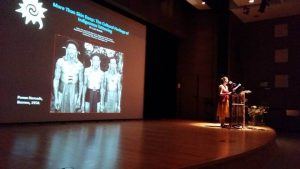
Tattoos of the Future // Yasmine Bergner
Research in the field of futurism examines the possibility that the world of tattoos will undergo an evolution in design, style, and technology in the coming decades; this is similar to the transformations that tattoo culture has experienced throughout history. We will examine how evolutionary and technological development can influence the way we decorate our bodies in the future.
Yasmine Bergner is the exhibition curator and a spiritual mentor through tattoos. She researches the history of tattooing and sacred geometry.
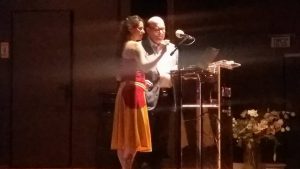
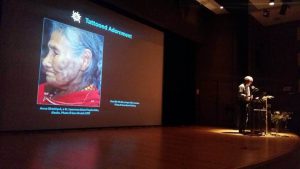
Indigenous Tattoo Heritage // Dr. Lars Krutak
The tattooed indigenous body is a tool of development and change, encoding within itself the ancient personal, social, ecological, and spiritual worldview, and existing over generations of tribal belief through a wealth of visual symbols (lecture in English).
Dr. Lars Krutak is a tattoo anthropologist, photographer, and researcher. He is famous for his research and books on the history and culture of the tattooed indigenous body. He produced and hosted the Discovery Channel documentary television series “Tattoo Hunter,” which documented vanishing tattoo cultures around the world. A variety of his works are presented in the exhibition.
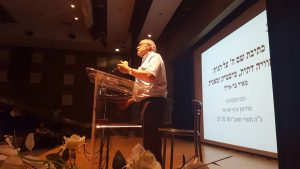
Writing the Lord’s Name on the Body: A Religious, Mystical, and Magical Experience // Prof. Meir Bar-Ilan
In ancient times, Jews used to write God’s name on the body in ink, and they did so within a religious, mystical, and magical framework. The lecture will review a selection of evidence for these ancient and forgotten customs and how they can be understood in the contemporary era.
Prof. Meir Bar-Ilan is a researcher of Jewish society and culture who teaches in the Department of Talmud and the Department of Jewish History at Bar-Ilan University.
Bar-Ilan researches a very wide range of sources in Judaism in antiquity. Through interdisciplinary research methods, he examines the Bible, external literature, Talmud, prayer, Hekhalot literature, mysticism, magic, numerology, astrology, and tattoos.
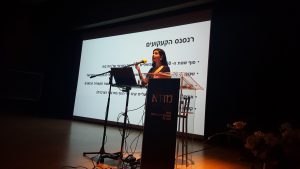
Tattooed Models: Representations of Femininity in the Digital Age // Malkiella Benchabat
The lecture seeks to examine the self-identity representations of models in digital media from a feminist perspective through their tattooed bodies.
Malkiella Benchabat holds a Master’s degree in Gender Studies from Tel Aviv University. Malkiella is a performer, photographer, and an independent researcher focusing on the intersection of tattoo culture, representations of femininity, and feminist theory. The “Tattoos” exhibition presents “Girls,” a series of photographic works by Malkiella Benchabat and photographer Dan Bellilty.
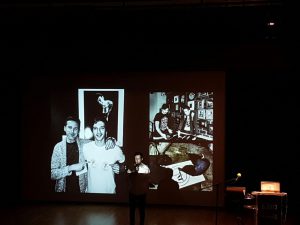
Tattoo Project // Alexander Tilkin
Alexander Tilkin and Stas Weinstein have been documenting contemporary Israeli tattoo culture in photography as a significant, large-scale phenomenon since 2011. The project strives to give expression in cultural discourse to a phenomenon that has approached the center from the margins in giant steps and has become in the last decade a significant and present component in culture and art in Israel and the world.
The lecturer Alexander Tilkin holds a Bachelor’s degree in Software Engineering, a Master’s degree in Computer Science, and is a student of Business Administration at Tel Aviv University.
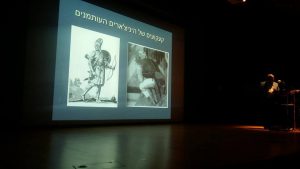
Jerusalem Under the Skin: On the History of the Jerusalem Tattoo // Mordechai Levy
The history of the pilgrimage tattoo, which is a tradition unique to the Land of Israel: an ancient custom since the Middle Ages of pilgrims to Jerusalem who used to tattoo themselves as a memento of their journey.
This tradition is continued by the Jerusalemite Razzouk family, the oldest tattoo family in the world, which is presented in the exhibition.
Mordechai Levy joined the Foreign Service in 1975. He served as a special advisor for Christian and Muslim affairs to the Mayor of Jerusalem (2004–2008).
Before his retirement from the diplomatic service, he served as Israel’s ambassador to the Holy See (2008–2012). He specialized in issues of pilgrimage to the Holy Land in the Middle Ages and the history of tattoos in Western culture.

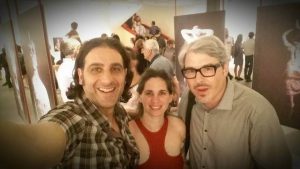
The opening: A moment of satisfaction with Dr. Lars Krutak and Wassim Razzouk
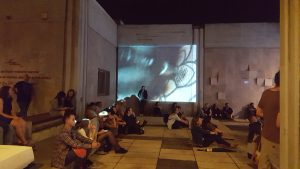
Opening evening: Video art by Chaim Mahlev, tattoo artist. Projection on the museum wall
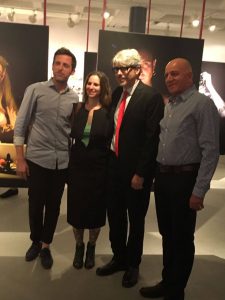
A moment of satisfaction at the official opening
In the photo: The museum management, Dr. Lars Krutak, Alex Tilkin, Yasmine Bergner
Yasmine Bergner is a multidisciplinary artist, tattoo artist, and tattoo culture researcher.