Fresh Updates

“Watiko” is a concept that comes from the Cree tribe in North America, a word that expresses a psychological illness that affects self-destructive human behavior. Our collective human psychosis.
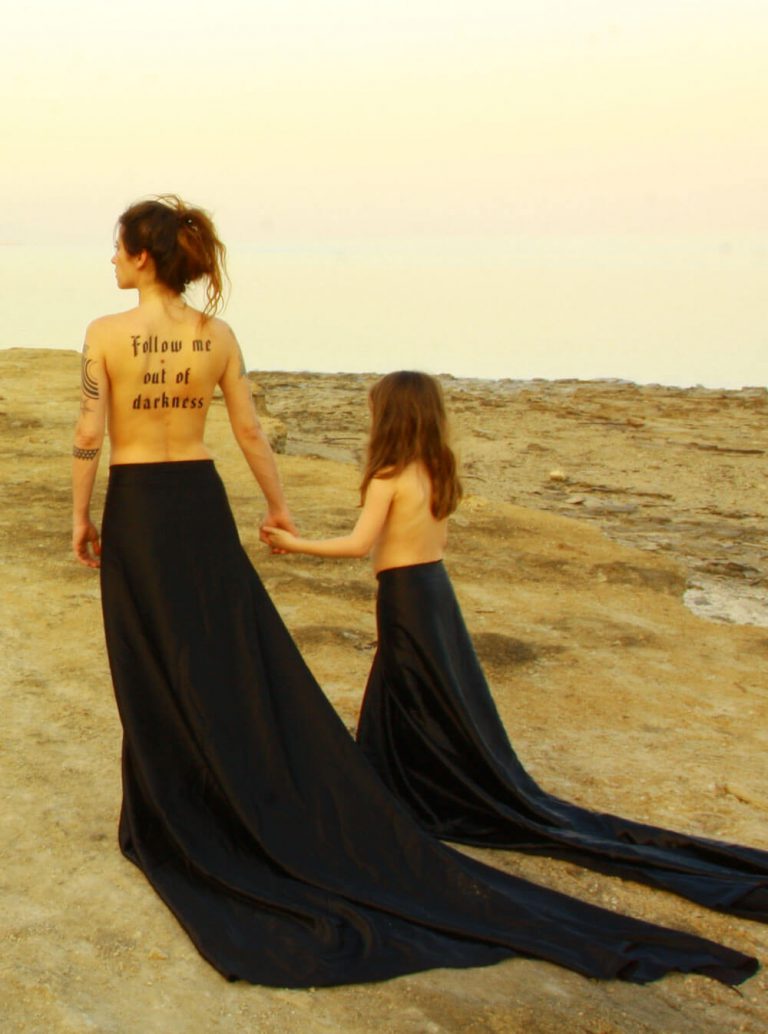
Many do not understand that the fundamental issue underlying women’s empowerment is the mother’s wound. Difficulties and challenges between mothers and daughters are violent, unrestrained, and widespread in society but are rarely spoken about openly.
In the first part of the article, we talked about a new technology being developed in the Ramin lab. Last year, the first version of the ARK resonance technology from the Ramin lab was released: lab-grown crystals that can be worn on the body. The crystals are designed and structured in a geometric way that creates a molecular structure that has the ability to resonate with the quantum field. This wearable technology creates a harmonic synchronization with the unified field and enhances the efficiency
“Modern science’s refusal to search for a higher order is slowing down the development of humanity and severely damaging the ecosystems on which we depend to survive and thrive. The implications and applications of the connected worldview provide us with a clear vision of our capabilities to evolve. Humanity is moving in this direction, but we must reach our destination in time and advanced technology must emerge as soon as possible.”
In recent years, we have witnessed an exciting process of tattoo revival in our region, albeit belatedly. Why is the tattoo renaissance coming to Israel about two decades late compared to the US, Europe, and the rest of the world?
It is possible that the practice of body adornment dates back approximately 100,000 years, or even earlier. Shells and bone tools discovered in Blombos Cave were found containing remnants of pigment made from red ochre. Archaeologists believe that the cave may have served as a workshop for the preparation of pigments.
Amid a brave surge of women coming forward with accounts of sexual harassment across industries, many of us, both women and men, are beginning to grasp the full extent of this reality of rampant misogyny. As a culture, the question is: Why do so many men have the urge to belittle, hate, and harm women? Where does this reality come from? And what can we do to stop it?

In the spring of 415 AD, a pagan noblewoman emerged from the lecture hall attached to the Great Library of Alexandria and called for her carriage to be brought so that she could drive herself home. Many educated pagan women enjoyed high social and academic status at the time, but Hypatia was one of the few who traveled independently in a carriage that belonged to her.
Currently, a fascinating exhibition is being displayed at Ben-Gurion University of the Negev, curated by Haim Maor (curator of the university galleries) in collaboration with students in the curatorial course, entitled “Portraits of Cain – Representations of Others in Contemporary Art in Israel.”
The myth relating to the powers of creation has always been an inseparable part of our lives. The trinity of myth-ritual-sacred, which recurs frequently in the cultures of the world (as the fascinating research of Mircea Eliade shows), today finds ancient and new ways of expression in a developing global movement of transformative festivals.
The deep wounds left by the Holocaust and World War II have cemented the swastika in our consciousness as an image that symbolizes satanic evil, racism, and fascism, despite the symbol’s innocence. Seven decades after the Holocaust, the swastika is still one of the most despised and vilified symbols.
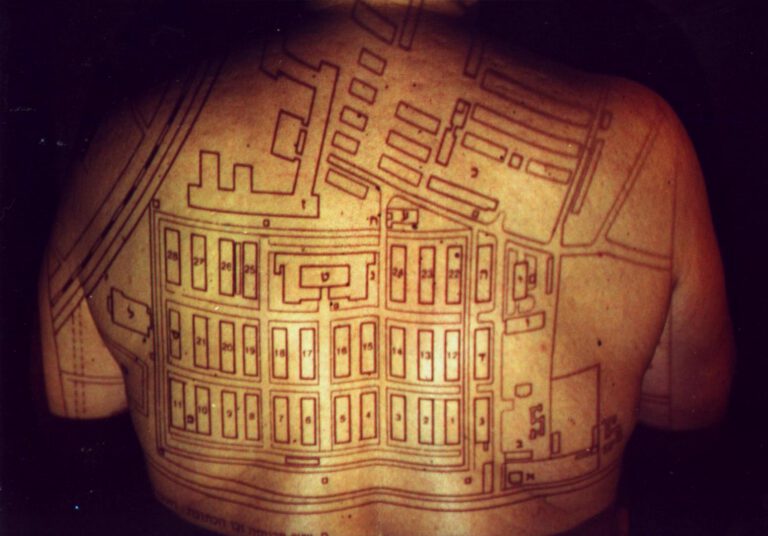
Until not long ago, the art world ignored the field of tattooing, excluding it and labeling it as primitive and inferior, but in recent years more and more artists have been using tattooing as a practice, as a symbol, or as an artistic act.
In an exhibition that addresses American tattoo culture, Rona Yifman continues to observe personas that operate with a sense of oppression, and discovers a humanity that transcends social definitions.
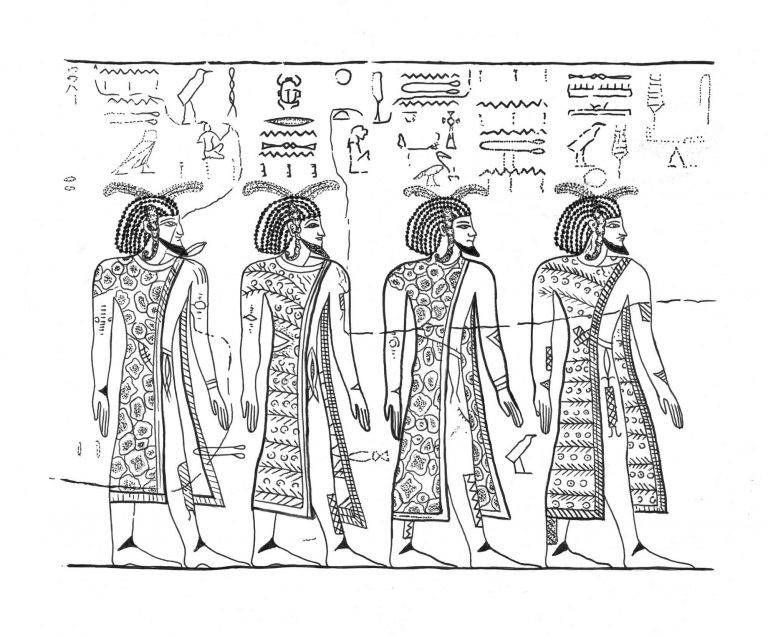
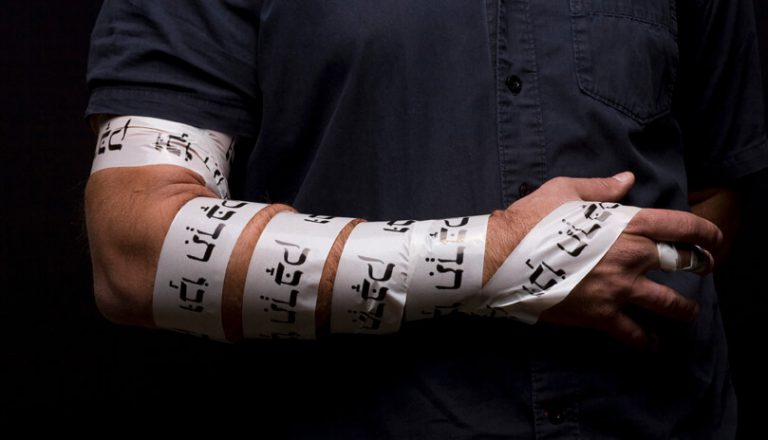
Contrary to popular belief, the Jews of the Biblical era maintained a rich folk tattoo culture. The common view is that Jewish faith categorically forbids tattoos. But is this historically accurate?