Fresh Updates

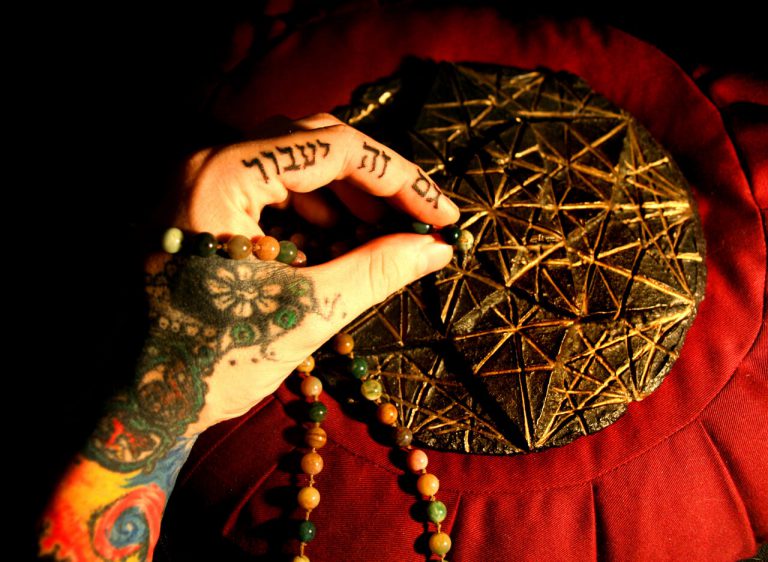
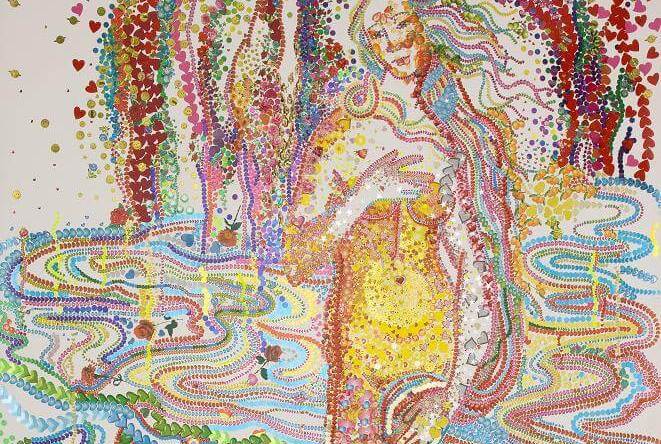
A new social trend is currently emerging that warmly embraces the tattoo genre and recognizes its importance. The Tattoos exhibition presents works of art by artists from Israel and abroad who relate to the act of tattooing in various ways of expression and reveal the variety of internal motivations for tattooing in the context of defining personal, national, gender, social, cognitive and spiritual identity.
The exhibition focuses on the ancestral aspect of the tattoo. Tribal cultures are structured in concentric circles, much like the rings of a tree. The individual is situated at the center, enveloped by an outer circle surrounding them: the collective tribal system. This social circle is wrapped in yet another outer circle: the socio-religious system, which expresses the tribe’s cosmogonic and mythological worldview. The tribal totem is an archetypal visual representation of the culture—the focus and heart of the tribe—serving as a collective ancestral tool for personal and social empowerment. It attracts cellular renewal, infinite creation, and a connection between the past and the future. The totem is a dual representation: the founding male/female pair, whose pairing creates culture. The mythical graphic themes that adorn the tribal tattoo are patterns drawn from the totemic language (which is the universal grammar—the symbols and archetypes of the culture). In this context, a tattoo is a kind of “personal totem.” A talisman of memory and an object of empowerment. In the tribal world, a tattoo is part of a shamanic rite of passage and initiation, throughout the stages of life.

Since the dawn of history, the tattooed body has been a means of glorification and personal and collective definition of man. The art of tattooing has its origins in traditions of shamanic rites of passage and initiation in indigenous cultures; every tattoo work around the world contains within it pieces of culture and history and also embodies personal, social, ecological and spiritual values.
We hold memories in our bodies, we hold longing and heartache. We hold joy, moments of heavenly peace. If we want to have access to them, if we want to move into them and through them, we must go into our bodies… Our bodies tell stories.
We must listen, respond, and acknowledge the importance and vitality of the constant presence of myth. The human cultural infrastructure is constantly changing, it is a flexible space based on our memories and our individual and collective consciousness.
Examining the various tattoo cultures throughout history across the globe gives us the ability to examine the human soul.
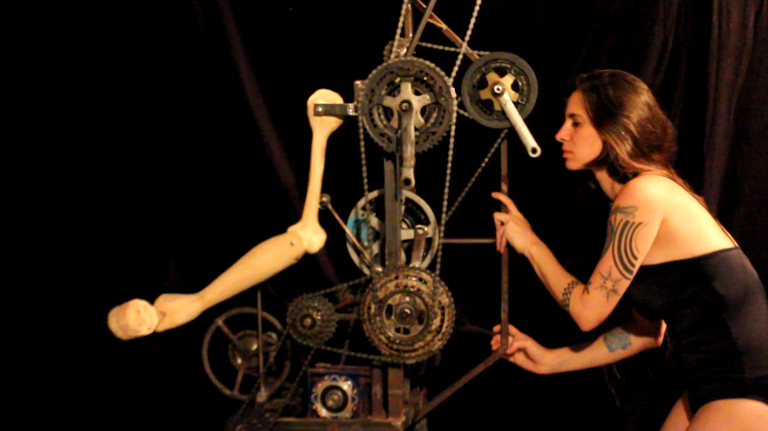
The experience of the work is highly aesthetic, like painterly aesthetics returning to material form. We feel both the sense of subjugation and the sense of joy and revelation, and we journey with the artist with the long hair through the female odyssey—a slow and precise return, leaving no detail forgotten, as the knowledge she has processed through her long practice is etched into us, like the tattoos on Yasmin Bergner’s body.
Yasmin Bergner’s works converge into the unconscious space and into archetypal symbols through physical presence.
The works describe a personal process in which archetypes take on personal meaning. Spontaneous sculptural works that expand to additional layers by a performance act that relates to them
Six young artists use images and materials from contemporary popular culture