
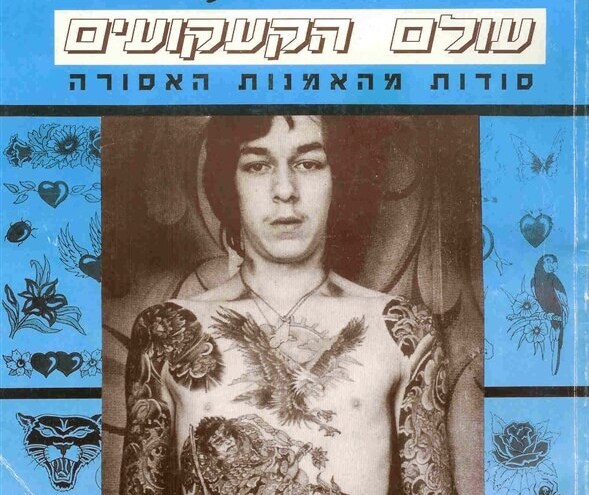
Opening image: Cover of David Mosko “The Tattooed Sailor”‘s book: “Tattoos – Secrets of the Forbidden Art,” 1980.
Tattoos in 21st Century Israel – A Late Blooming
Expert from “Tattoos – The Human Body as a work of Art” Exhibition book
Curator & researcher: Yasmine Bergner
In recent years, we have been witnessing an exciting process of tattoo revival in our region, albeit belatedly. Why is the tattoo renaissance arriving in Israel with a delay of about two decades relative to the U.S., Europe, and the rest of the world? Friedman (2015) notes that the tattoo revival trends observed in other parts of the world, such as the Pacific Islands, have not yet penetrated Africa and the Middle East. Nevertheless, the globalization process has left its mark on Africa and the Middle East, and a tattoo art form rich in styles and influences imported from both East and West is flourishing. Tattoo art is thriving primarily in major urban areas, particularly in North Africa and Israel. The artistic influences of tattoo artists in our region are not indigenous, but global [1]. An underground tattoo scene is also sprouting around us. In Cairo, several tattoo studios operate through a combination of local tattooists and traveling artists from around the world, and in 2015, the first tattoo convention in Cairo was held. A local and international tattoo scene is also beginning to flourish in Lebanon, Jordan, and Dubai.
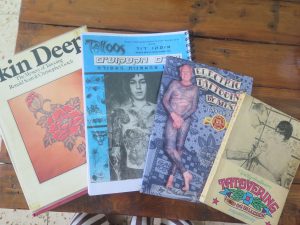
Vintage tattoo books, courtesy of David Mosko, the Tattooed Sailor
Until the late 1970s, the art of tattooing in Israel suffered from a negative image for several reasons:
Stigma and Prejudices: Most tattoos seen on Israeli streets until the early 80s were done amateurishly and were associated with crime, lack of education, and fringe culture [2]. The tattoo phenomenon was small in scale, and it was rare to see tattooed people in public spaces.
The Jewish Prohibition: The prevailing approach among the public is that Judaism categorically opposes tattoos. Until recently, this argument was a heavy element that led to a cultural attitude viewing tattoos as a “taboo.” Today, new studies and interpretations are entering the public discourse, acknowledging the possibility of the existence of an ancient Jewish tattoo culture (see the articles of Meir Bar-Ilan).
The Holocaust: The marking of millions of Jews in the Holocaust made the act of being tattooed itself abhorrent and impossible for many Israelis, especially those of the first and second generations of the Holocaust. In the collective memory, the act of tattooing was identified directly with coercion, slavery, and the dehumanization of masses of people for the purposes of a murderous and inhumane regime, rather than as an art form with beauty and meaning [3].
Tight Social Control over the Individual: Until the 1980s, the model of parental authority, the education system, and the military in Israel held significant weight within the intimate and familial sphere of the State of Israel. “The sanction for deviating from the collective standard, and especially for highlighting the self, was harsh and painful until the 1970s, deterring many young people from rebelling against Zionist conventions […] Proletarian and resource-poor Israel of the first two decades rejected expressions of aesthetic refinement and glorified a modest, ascetic, and frugal lifestyle, which found its expression, among other things, in the avoidance of external ostentation.”[4]
Undeveloped Nautical Tradition: “Israelis are not known for having produced adventurous explorers or tough admirals. The Israeli Navy has always been a tiny force within the IDF, and the merchant fleet was quite small and employed quite a few foreign crew members.”[5] In this context, it is interesting that the first Israeli tattooist, David Mosko, was a sailor by profession and drew his inspiration from global tattoo culture during his travels at sea.
A lack of information and professional literature in Hebrew on the subject of tattoo anthropology and history led to a fixation on this perception in Israel for many long years.
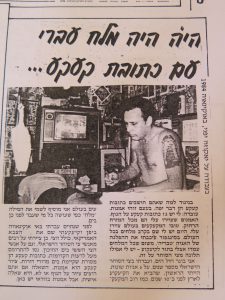
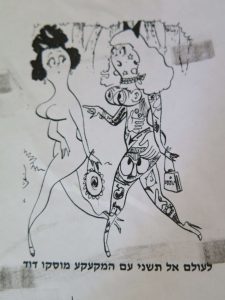
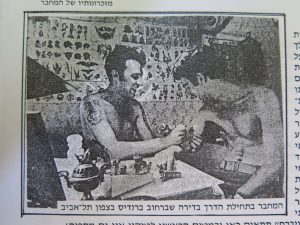
Images courtesy of David Moskovich (Mosko) the Tattooed Sailor
The first (unofficial) tattoo anthropologist in Israel
Tattoo Culture as a Mirror of the Israeli Existential Condition
Every society encourages a certain body and suppresses another. The meaning given to the body is also determined by society. One can call the body that society encourages to create the “Chosen Body.” We will deal with the Chosen Body in Israeli society. The supervision of society’s boundaries follows us from Jewish tradition and religion.
Art scholar Gideon Ofrat notes a stunning fact: the word “guf” (body) does not appear at all in the Bible and appears for the first time in our sources in the Talmud (in Arabic: jifa). In contrast, the word “body” returns 92 times in the New Testament, usually referring to the body of Jesus. The Bible only knows the word “gufah,” in the meaning of a corpse: “And they carried the corpse of Saul and the corpses of his sons” (1 Chronicles 10:12). In the Hebrew language, the word “guf” signifies the essence of a matter: “to the body of the matter” (to the point). The “I” (self) is identified in Hebrew with a body: “first person” (first body), “second person” (second body), etc. “However, there is no connection whatsoever between all these ‘bodies’ and the body of flesh-and-blood-impulse. The body of Hebrew is devoid of Eros.”[6]
Throughout history, Jews have identified themselves as persecuted by external factors. Judaism has strict laws for preserving the body—laws of kashrut, purity, and more. Halakhic laws are clear regarding the shape of the Jewish body (circumcised, whole for burial), and they distinguish between the Jew and the stranger. The figure of the pioneer (Halutz) and the Sabra constitute the ethos of the Israeli figure, to which Arabs do not belong. Israeli society exists in a state of constant war and a state of fluid national borders that create a constant threat to its “gufah” (corpse/body), whether the feeling is real or constructed by the body politic. Pegis argues for the “existence of a hierarchy of bodies in Israeli society, at the head of which stands the ‘Chosen Body.’ This body is a Jewish, masculine, Ashkenazi, healthy, whole, and perfect body. The design of this body began with the Zionist revolution, which was also a physical revolution—a people of the spirit becoming a people of the earth—and continues to this day”[7].
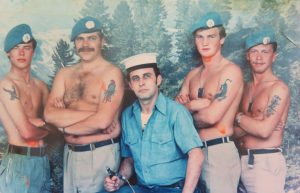
Courtesy of David Moskovich [Mosko], from the exhibition:
Tattoos – The Human Body as a Work of Art, Curator: Yasmine Bergner
It seems that youth in Israel live in a multi-faceted and changing existential state. The IDF is the most powerful agent of the body politic. In it, priority is given to a strong and flawless body. The family and Israeli society cooperate unconsciously with the “prestige” of the body politic. We are witnessing the modification and commodification of the body. The body of the combat soldier becomes the body politic and the Chosen Body. The personal goal and the social goal unite. The body politic through the IDF, which also engages in educational functions, creates docile bodies (Michel Foucault). The Institute of Forensic Medicine reflects the body politic. At this station in the life cycle of the body, there is complete control of the body politic over the individual body, expressed in the circumcision of uncircumcised Jews and (in the past) the removal of tattoos.
“Israeli society is a collective society with clear boundaries and a hierarchy of body, at the head of which stands the perfect combat soldier’s body. In Israeli society, there is a direct link between ideology and politics to body images. Israeli society is special in that although it is a complex society, it is still collective, and the transition to the individualism common in Western societies is unclear and not unequivocal […] The article constitutes a strong subversive call against the perceptions taken for granted in Israeli society” [8].
The complex patterns of Israeli youth can only be understood through the prism of the Israeli existential situation and its implications for the younger generation. Israeli society is very family-oriented. Familiality is a supreme value in Israeli culture, formulated primarily as mutual dependence and intimacy between family members, support, shared destiny, and agreement with family values [9] (Rappaport et al. 1995 in Jacobson and Luzzatto).
Some say that Israeli youth do not develop patterns of protest because of the individual’s immense identification with the ideology of the collective. This helps explain why Israeli youth (almost) did not develop counter-cultures, and especially today we are witnessing the emergence of social protests that are in the stage of a “revolution that has not yet been completed.” One of the prominent characteristics of Israeli youth is its centrality. Youth are considered a security asset to the state. While young people are in the transition stages between childhood and adulthood, they are expected to be future soldiers, and most boys are expected to be combat soldiers. For this reason, youth receive a lot of respect and consideration even at very young ages and are given a platform to express themselves on certain issues. Youth in Israel are aware of the possibility of death on a daily basis—whether their own death or that of their friends or relatives. It was found that awareness of death among Israeli children develops at an earlier age compared to other Western countries [10].

Courtesy of Dan Belilty and Malkiela Ben Shabat
From the exhibition “Representations of Tattoos in Contemporary Art”
Ben-Gurion University, Curators: Yasmine Bergner and Haim Maor
The flourishing of tattoo culture in Israel in recent decades
registers several important aspects:
Mass culture and a decrease in social control: Tattoo culture in the 1980s is characterized by symbols and codes that characterize a young subculture, as part of a popular culture and not as a protest or expression of a private position. Since MTV first launched in 1982, music stars have become a leading authority in various fields of fashion. The MTV style influenced popular media culture as a whole, which absorbs and mixes everything and turns alternative cultural forms like hip-hop and grunge into leading alternative fashion and advertising.
These processes bring about a gradual decrease in social control; the margins are approaching the center, and the boundaries of social tolerance are being constantly expanded. The young culture generation of the 1990s and 2000s differs from its predecessor in that it lives in a better economic situation than the generation of the 1960s and 1970s, and indeed, the increasing consumer culture encourages self-cultivation, engagement with appearance and fashion. But to understand the phenomenon deeply, it is worth recognizing the psychological, mental, and spiritual aspects of cultivating the “self” as an empowering means of expression for personal definition. In every cultural trend, there is a fluctuation between fashionability and fleeting superficiality and significant, long-term conscious development.
The tattoo as a strategy of reclaiming ownership over the self that was enslaved by post-modernist capitalist dictates: Decorating the body with tattoos symbolically expresses the yearning to take back the control that was expropriated from the individual within the framework of capitalist culture and within the educational frameworks of children and youth (schools and boarding schools, the army, and youth detention mechanisms). Military service is by its very definition total and oppressive, and a high degree of control over the individual is exercised within it.
In this context, the tattoo can become part of the process of reclaiming ownership of the self, when young people are intensely immersed in these institutions and situations in which they experience an undermining of personal freedom and self-identity (Benson 2000, Douglas 1970, Kingwell 1996, in Jacobson and Luzzatto) [11]. These situations create fluctuations between conformity and protest: sometimes this protest is directed against the establishment exerting pressure, but it is mostly directed against an oppressive existential situation that is considered inevitable and difficult to endure because of the forced uniformity within it.
Decorating the body as a means of social protest against the establishment or the previous generation: Tattoos as expressing a position or identification with aspects of oppression and enslavement in society. The use of a tattoo can constitute an expression of a position directed toward adults, and its central meaning is taking responsibility. The permanence of the tattoo as an irreversible act. In the context of intergenerational discourse, tattoos can express protest against the world and the values of the previous generation; they express negotiation and bargaining regarding the boundaries of their self-expression within the boundaries of conformity with the parent figure. Parents participate in the negotiation, and sometimes even support the tattoo.
Some even get tattooed themselves. This is consistent with the centrality of the family, which is one of the ultimate values of Israeli society, which is strengthened even more when the country is in a state of war. This discourse not only involves the degree of legitimate parental control over the symbolic freedom of choice of young people but may also serve as a bridge between the different existential situations of the generations. The language of tattoos and piercing is multi-faceted. Different symbolic meanings are emphasized according to the context and express a fluctuation between conformity on one hand, and individualism or protest on the other [12].
In Israel, it is reported that the demographic curve is leveling out over time, meaning the tattoo is gradually becoming a fashion that crosses age and class strata. The socio-economic status of those getting tattooed is becoming increasingly diverse. If in the past (until the 1970s) the vast majority were men from the less-educated stratum and the lower class, since the 1980s, the socio-economic status of tattoo culture has been steadily rising and includes the middle and upper class—among them a variety of people in liberal professions [13]. This process parallels the demographic changes in the U.S.
Tattoo researcher Margot DeMello [14] notes that tattoo culture in the U.S. is undergoing a gradual process of sociological and demographic change. From the beginning of the last century, tattoos were associated with fringe people, sailors, prostitution, and delinquency—that is, the lower class. From the 80s onwards, tattoos are observed among the middle class, and from the 90s onwards, tattoos are also associated with members of the upper class.

In the photo: My beloved tattoo clients: Shani, Oren, and Dave, Kinneret, 2022
The extensive backpacker culture and Israeli tourism in the world find themselves influenced by indigenous iconographies and tattoo cultures in the distant places they visit and even get tattooed in. From the beginning of the 2000s until today, tattoo culture is no longer just “young culture” but is also present among older people aged 40-50 and up.
The first decade of the 2000s was very fruitful in the field of tattoo culture in Israel. In 2002, the first museum exhibition in Israel on the subject of tattoos was presented, “Line on Body” at the Tower of David Museum in Jerusalem (curator Renna Sivan). The exhibition displayed collectibles borrowed from the Dutch tattooist, collector, and tattoo researcher Henk Schiffmacher, who tattooed well-known musicians like Pearl Jam, Red Hot Chili Peppers, and more. Schiffmacher established the Tattoo Museum in Amsterdam, which displays tattoo tools from around the world, as well as tattoo machines designed by the Israeli Tattooed Sailor, Mosko David, tattoo posters, stamps, historical photographs, and special objects.
Since then, additional exhibitions have been held in Israel on the subject of tattoo culture and art [15], and articles have explored the connection between art, culture, and tattoos [16]. Public discourse around tattoo culture has intensified drastically. Intimate blog writing like that of “Tabula Rasa” [17] (since 2010) documents the tattoo culture in Israel and the world in photography and text. The sensitive writing describes with empathy and curiosity full of respect its tattooed subjects:
“The human body fascinates me. The body in motion, the body disguised, the body naked, the body wounded. Through tattoos, I encounter every time this fetishistic idea of the body as a text. Perhaps the first time (but not really) that I encountered this idea was when I watched Peter Greenaway’s film ‘The Pillow Book,’ which describes the story of a woman who was painted on ceremonially from her childhood. The girl grows up to be a writer who wants to publish her books, but the dubious publisher rejects her books again and again. And then, she gets an idea: she will seduce him with young and beautiful men, who are favorites of his, and on their bodies, she will write her books. As she continues the project, the content of the books appears on the body as a form. The Book of Secrets is written in the hidden corners of the body. The Book of Silence is written on the mute tongue. The meaning becomes more mysterious, more coded.”
Since 2013, annual tattoo conventions have been held in Tel Aviv, in which dozens of tattooists from Israel and abroad participate, and thousands of tattooed and curious people visit.
Gender Changes
Gender differences in tattoo selection in Israel during the 1970s to 2000 are consistent with findings of studies showing that body cultivation is emphasized more in women, who are subjected to tighter social control regarding their external appearance (Silverstein et al. 1986, Stein and Nemeroff 1995, Udry and Eckland 1984, in Jacobson and Luzzatto) [18]. In their study from the beginning of the 2000s, they find prominent differences between women and men. Young women (of all ages) tend to attribute a symbolic meaning to their choice that connects to relationships and positive emotions like friendship, gentleness, love, and the search for beauty.
Furthermore, feminine choices versus masculine ones are consistent with gender construction in Israeli society, where women are educated to be dependent on emotional relationships, to demonstrate refined behavior, and to avoid aggression, while men are expected to demonstrate assertiveness and aggression and to be warriors. This limited freedom symbolizes the situation of women in society. In contrast, men tend to prefer larger tattoos (birds of prey and wild animals) (symbolizing control and physical strength), among other things, to prove masculinity, courage, and the ability to withstand physical pain. Sometimes male sexuality is expressed by decorating the body in erogenous areas.
Until the beginning of the 2000s, tattoos in Israel were done mainly by men. Until a decade ago, the number of professional female tattooists in Israel was very small, but today, Israeli tattoo culture is undergoing significant transformations in this area. There are already several dozen professional female tattooists. Numerically, the situation is still far from being equivalent to men, but it is becoming balanced. As mentioned, it seems that the choice of a tattoo among young Israelis at the beginning of the 2000s is related to the Israeli existential gender situation, which causes a high degree of conformity among members of the same sex and highlights the difference between the genders.
At very young ages (13-14) there is less difference between the genders, because boys and girls tend to choose cartoon characters. Prominent differences are registered at ages 15-17 when boys choose more powerful motifs (monsters or wild animals); it seems that military service reinforces gender differences even more. Today, such gender differences are becoming balanced, in the world and also in Israel. The tattoo is taking up a wider part of the skin of those getting tattooed, and the styles are already unisex in their essence, although not always.
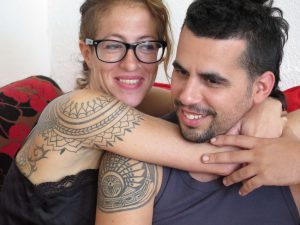
Revital and Gil
Fleeting Fashion or Significant Cultural Development?
Contemporary Israeli tattoo culture is a mixture of cross-cultural influences. It is difficult to point to homogeneous lines for the figure of the average Israeli tattooee, and this is probably a combination of personal preferences and social influences. Global tattoo culture is seeping rapidly into Israeli society more than ever. Tattoo subjects in Israel are influenced mainly by tattoo cultures imported from around the world. The borrowing and artistic and value-based inspiration they provide become significant and layered and establish themselves more and more within the local culture. Tattoo art in Israel is also developing as a profession. More and more, it is possible to find tattooists who specialize in a specific style with great virtuosity.
Following the discussion on the subject of the “Chosen Body” in Israeli culture, the body as an object operated, designed, and tamed by power mechanisms. In this context, tattoo subjects who turn their bodies into an extensive and multi-year tattoo project represent a reverse process that strives to free the individual from the patterns of the “docile body.” The body that was subdued and exploited by the dictates of social, religious, political, and capitalist power mechanisms—reinvents itself and frees itself.
Methods of discipline existed for a long time (in monasteries, armies, detention facilities, hospitals, and workshops) and gradually became of a militaristic disciplinary nature that reached its peak in post-modern factories. In the 17th and 18th centuries, general formulas of rule were made that led to the construction of deep patterns of obedience and efficiency, which are at the heart of capitalist culture. “The historical moment of disciplines is that in which an art of the human body is born, which is directed not only to the growth of its skills and no longer to the burden of its enslavement, but to the creation of a relationship that in the same mechanism itself makes it more obedient the more useful it is and vice versa. Then a politics of coercions is consolidated that are work on the body, a calculated operation of its elements, of its gestures, of its behaviors. The human body enters into an array of power mechanisms that digs into it, disassembles it, and reassembles it, a ‘political anatomy'” [19].
Contemporary sociological studies show that the body is returning to the forefront of the social sciences. Since the late 70s, the study of the body has been enriched with a collection of cultural, relational, and political approaches. Issues related to the body have risen to the top of the social research agenda. Weiss [20] notes that the study of the body as a social phenomenon has undergone several changes that can be examined on a continuum moving from the physical body, through the social body, to the body politic. The social body, its origin is in the anthropology of Mary Douglas, and it is defined as the way we use the body as a symbol, as a concept through which we understand society, nature, and culture. The body as a site of self-definition and social definition, a mirror reflecting the relationship between the individual and themselves and between themselves and the society in which they live. In this context, the language of tattoos and carrying symbols on the body forever function as social networks that communicate with each other [21].
“Our perception of the body, and how it should be and look, is influenced by social control. Social control over the body exists in all human societies. In simple societies, it is direct and open control, disobedience to which leads to punishment by the community. Also in modern society, there is control over the body [22], but in an indirect and more disguised way, so that the individual is most of the time under the illusion as if he or she are supervising themselves and of their own free will over their body and determining their external appearance. But in fact, also in modern society, there exist and operate various and diverse control mechanisms over the body, according to the dictate of society and culture, class, and fashion” [23].
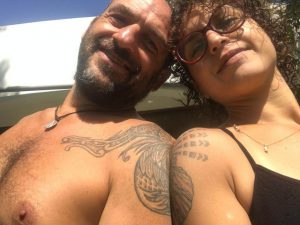
Effi and Liel
The body is always in the process of becoming. Or as musician Ani DiFranco says, “We are a work in progress.” This is a way to express the gap between the personal body and the social body and the process of integration between them. In the post-modern era, the body is an “unfinished project,” we are “working on the body,” and this work never ends. The body is characterized by a constant lack, and in an attempt to fill this lack, the individual can approach the ideal of the whole body. People who have chosen to cover their bodies with tattoos use this tool to approach their private ideal externally and internally.
The tattooed body is a performance, a statement that we wish to etch into our consciousness and into the consciousness of the observer. The symbol tattooed on your body gives it a public status and therefore again political. The tattoo is both an internal essence and an action in time and space. In my opinion, the main goal of tattoo subjects around the world and in Israel today is ultimately mainly empowerment and personal and social expression.
Summary
In summary, it seems that in Israel 2016 (when this article was written) tattoo art has captured our hearts and is here to stay. The idea of a tattoo as a symbol of individuation and personal expression, as a rite of passage and personal initiation, is gradually seeping into consciousness. Many Israelis say that every tattoo marks significant periods in life; many relate to the tattoo as a kind of amulet. They develop long-term relationships with their body. They change and design it gradually until it becomes a “Chosen Body” of a new, more authentic type. The tattooed body as a personal body diary, reminding us where we came from and where we are going, is experienced more and more in the Israeli public as a deep internal and spiritual process. “There is something empowering in physical pain, in the knowledge that you choose it and that it is not necessarily a negative thing, but a part of life. The tattoo has the ability to produce a creation from the pain. The tattoos connect me to this place in me and to the internal forces that I have. It’s like wearing my beliefs on my body” [24].
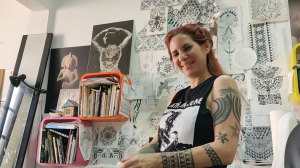
“A tattoo does not cross the skin barrier and yet it has a special ability to connect body and soul, between one person and another, and between the individual and the culture in which they exist. If in the past tattoos were considered an expression of rebelliousness and non-conformism, today they represent more than anything our freedom of choice. Tattoos are an illustration of our ability to change and be changed. Through them, a person can take ownership of their body and turn it into a temple, a canvas, or a private billboard” [25].
Bibliography:
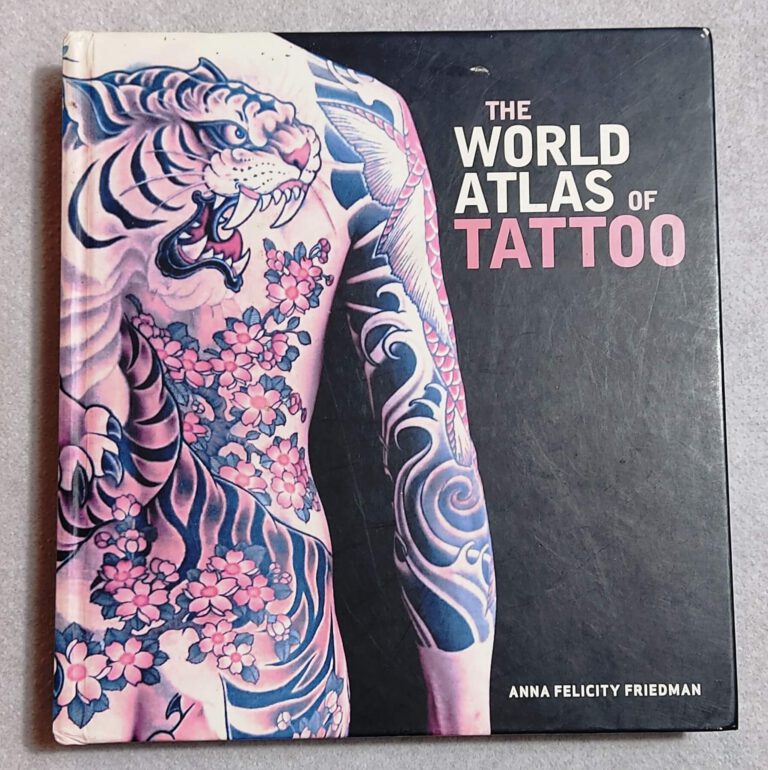
[1] Anna Felicity Friedman, World Atlas of Tattoo, Yale Univ. press, 2015
[2] David Mosko, “World of Tattoos, Secrets from the Forbidden Art,” self-published, 1980
[3] Yasmine Bergner “Bodily Ownership of the Symbol,” article, Erev Rav, online magazine for culture and art 2013.
[4] Oz Almog, Tattoos in Secular Society in Israel, article. Anashim-Israel-The Guide to Israeli Society, Samuel Neaman Institute, National Policy Institute, p. 12 2008
[5] Ibid p. 12
[6] “The Body is Political,” Hadas Ofrat, Gideon Ofrat, Dror Harari, Uri Drummer, Journal: Dance Now, Issue 13, December 2005, pp. 32-34
[7] “Anthropology of the Body – Analysis of the Chosen Body Thesis,” article, Michal Pegis
[8] Ibid p. 7
[9] Diana Luzzatto, Yehuda Jacobson, Israeli youth body adornments- Between protest & conformity, Young- Nordic Journal of Youth Research, 2004
[10] Ibid p. 157
[11] Ibid p. 157
[12] Ibid p. 160
[13] Oz Almog, Tattoos in Secular Society in Israel, article. Anashim-Israel-The Guide to Israeli Society, Samuel Neaman Institute, National Policy Institute, 2008
[14] Bodies of Inscription- A cultural history of the modern tattoo community, Duke University Press, Durham & London 2000
[15] (“Ancestors,” Benjamin Gallery, Tel Aviv, July 2013, Curators: Yasmine Bergner and “Tattoos- Representations of Tattoos in Contemporary Art,” Ben-Gurion University of the Negev, Curators: Yasmine Bergner and Prof. Haim Maor, October 2013.)
[16] Yasmine Bergner Archive, Erev-Rav, online magazine for culture and art, 2012-2014
[17] http://tabularasa.haoneg.com/page/2
[18] Diana Luzzatto, Yehuda Jacobson, Israeli youth body adornments- Between protest & conformity, Young- Nordic Journal of Youth Research, 2004
[19] “Discipline and Punish,” Michel Foucault, Resling, 2015, from French: Daniela Yoel p. 172
[20] Weiss, Meira (2002) The Chosen Body. Stanford: Stanford University Press.
[21] Makiko Kuwahara, Tattoo- An anthropology, Berg, Oxford International Publishers LTD, 2005
[22] “Discipline and Punish,” Michel Foucault, Resling, from French: Daniela Yoel 2015
[23] Weiss, Meira (2002) The Chosen Body. Stanford: Stanford University Press. P. 1
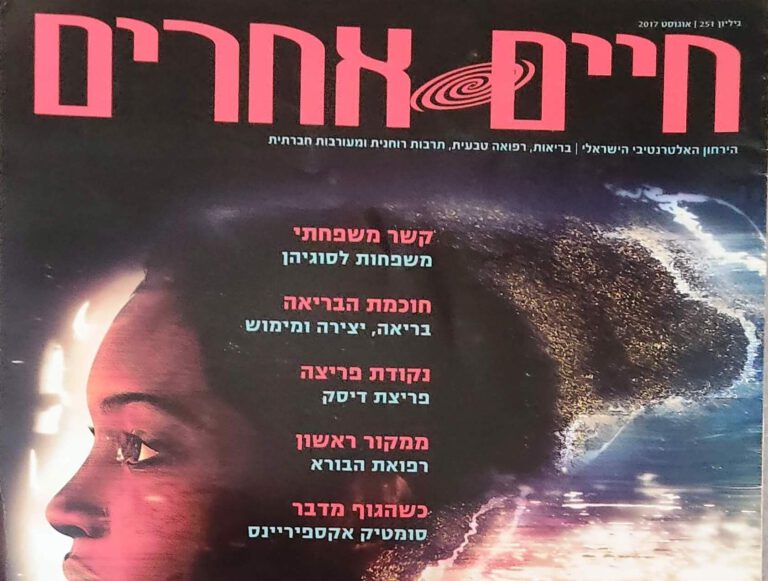
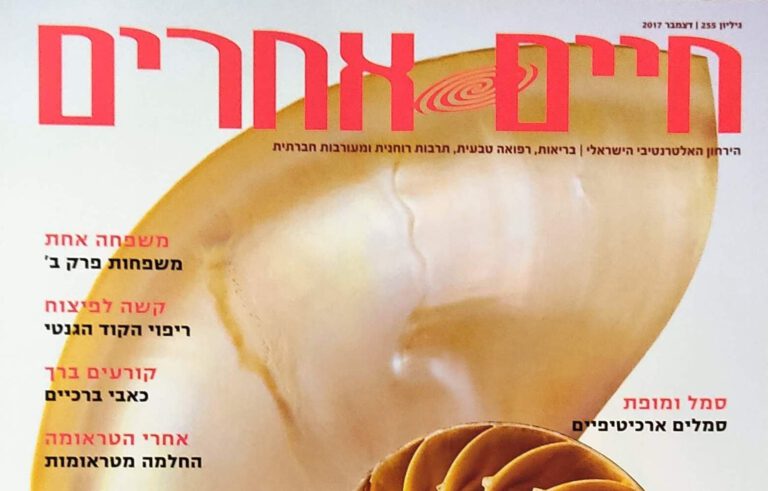
[24] “Tattoos of Our Character,” article, “Hayim Aherim” magazine, Oriana Shapi, 2016 (p. 40)
[25] Ibid, p. 43
Research and writing: Yasmine Bergner
Artist, tattooer, art therapist & culture researcher